 Roman Fradin
Is your SOLIDWORKS CAD data ready for AI? Find out with the CAD Data Assessment
The bottom line: AI doesn't correct your data—it learns from it
Your SOLIDWORKS CAD database spans 10 to 30 years: thousands of files, multiple teams, naming conventions that have evolved, and staff turnover.
The result: duplicate files, broken links in assemblies, multiple versions, and incomplete properties.
AI doesn’t correct your data—it learns from it. If your CAD database contains duplicates or empty properties, the AI will confidently reproduce them in its responses. Just a few errors are enough for your teams to lose trust in it, and your investment is lost.
Qualifying your data is therefore not an option —it’s the first step in any AI project and any migration to a new platform.
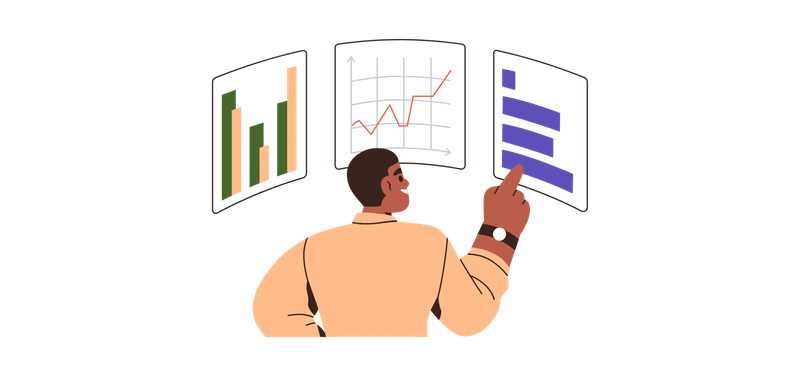
CAD Data Diagnostics: The “Nutri-Score” for Your CAD Database
We scan your database and analyze it based on 25 checkpoints organized into 5 categories:
General analysis: volume, number of parts, assemblies and drawings, part types (sheet metal, mechanically welded, volumetric, surface-based, etc.).
File names: duplicate names, identical contents, spaces at the beginning or end of a name, special characters.
Properties: most commonly used properties, variants to be merged (e.g., “Projet / project”), files without properties.
Structures and assemblies: valid and broken references, assemblies without components, out-of-context references, average and maximum assembly sizes.
Configurations, versions, and paths: SOLIDWORKS versions present, distribution of configurations, path lengths.
What you receive in real time:
A comprehensive report on the quality of your database, with metrics and prioritization.
A dedicated action plan
A clear overview of the work required:
what can be processed in bulk, and what requires your decision-making
What if you were one of the first to try out our CAD diagnostic tool?
You come first: you’ll receive support from our experts.
You help shapethe tool: your feedback guides future updates to the diagnostic.
You make decisions based on facts: no more blind migrations, no more surprises during the project.
You prepare for AI: you know where you stand before investing.